
Voice Comic - When Comics Truly "Speak" (Part 1)
XU HƯỚNG
Mai Châu
7/31/2025
Have you ever felt your heart skip a beat upon hearing the voice of your favorite comic character? One you thought would only ever live on the page and in your imagination? As the comic industry continues to evolve to meet the demands of a multimedia-driven entertainment landscape, today’s readers don’t just want to read stories. They want to hear them, feel their rhythm through sound effects, and experience them in new dimensions.
To meet this growing demand, voice comics were born. This format blends traditional static comic visuals with audio elements such as voice-over, sound effects, and background music. It creates a fresh, emotionally rich storytelling experience that is especially compatible with today’s social media platforms. At HuMa, we believe that voice comics are not just a passing trend. They are a natural part of the storytelling evolution in visual arts. Let’s take a closer look at what makes this format so exciting.
The Mechanics Behind Voice Comics
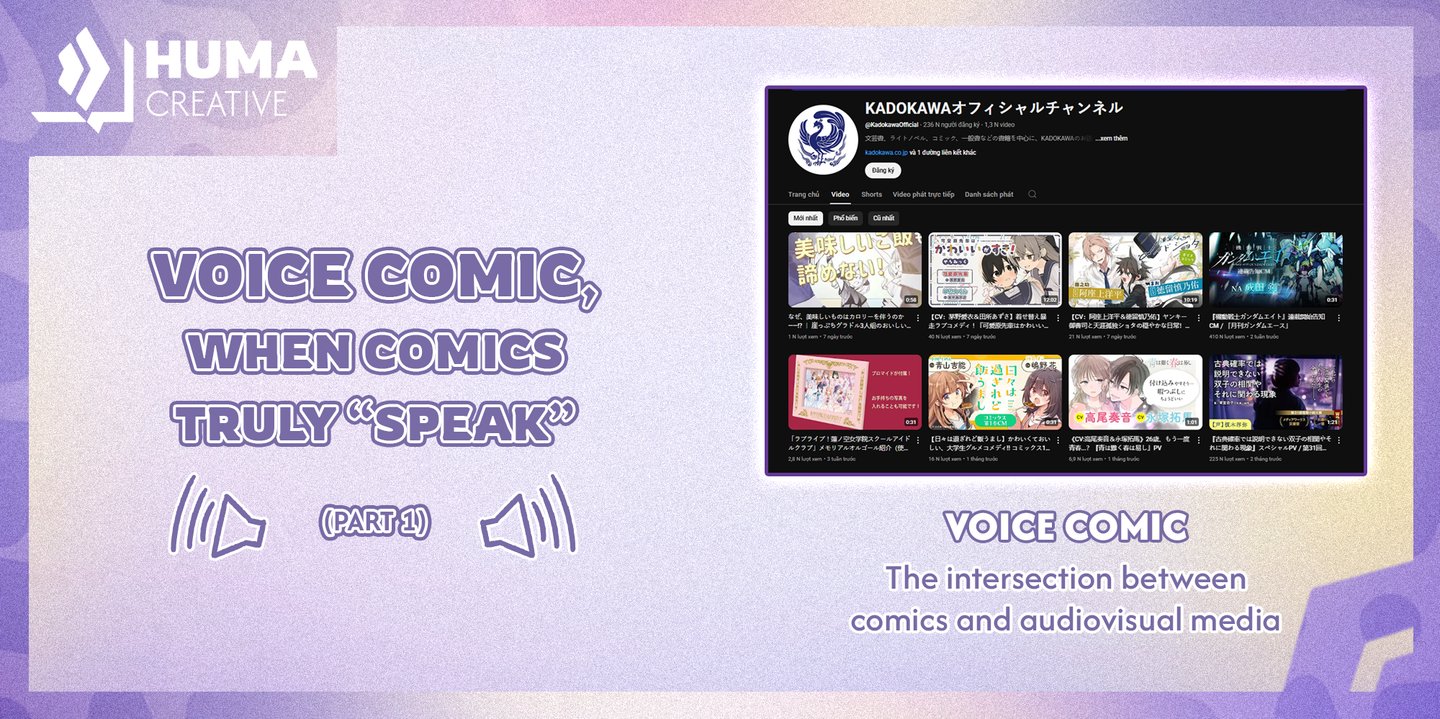
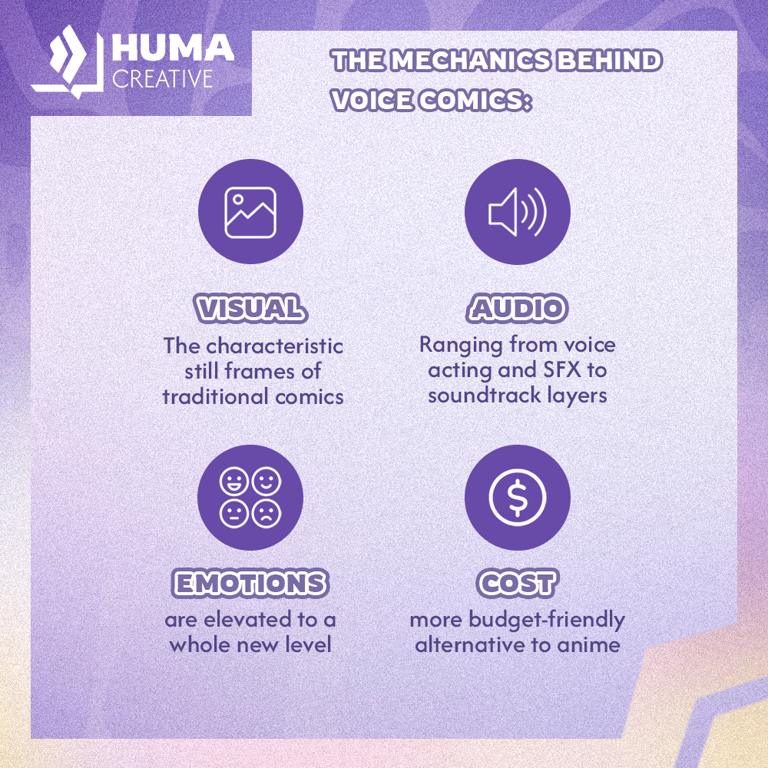
Voice comics are the intersection between comics and short-form audio visual content. They retain the static panels of traditional comics but are “activated” by audio elements. These include character voice-overs, sound effects, and music, all of which add depth and emotional resonance.
Creating a voice comic typically involves several key steps. The original script is adapted into spoken dialogue to ensure natural voice acting. Panels are cropped and enhanced with subtle motion effects such as parallax or zoom. Professional voice actors record the lines, and the audio is edited in post-production to deliver a seamless experience.
Compared to anime, voice comics are much more cost-effective and faster to produce, while still retaining emotional impact through vocal performance. This makes them an ideal tool for both large publishers and smaller creative teams looking to promote comics or test market reactions before investing in a full anime adaptation.
Voice Comics and the Modern Content Landscape
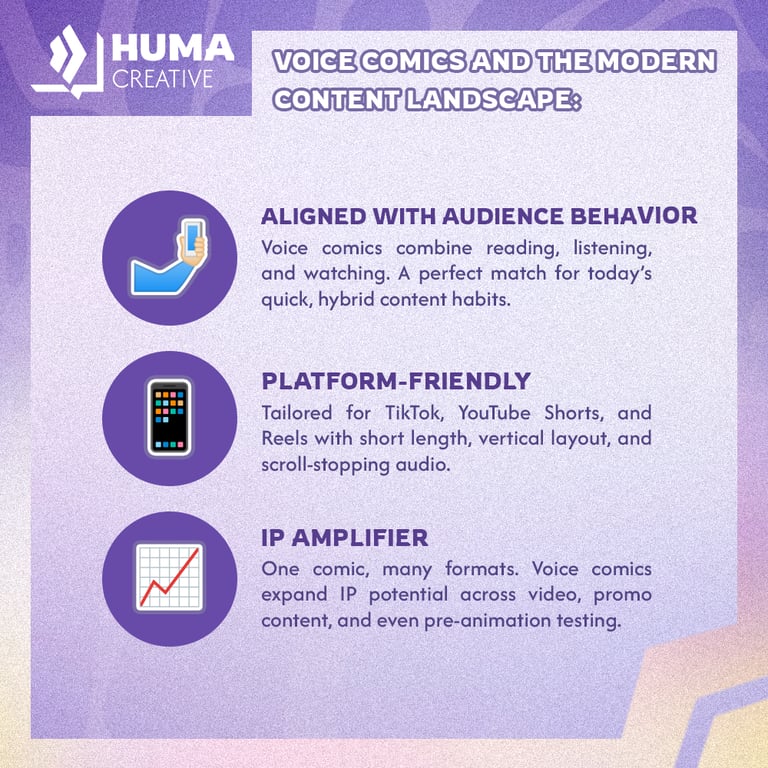
Modern audiences, especially Gen Z and Gen Alpha, naturally gravitate toward hybrid content formats. They want to read, listen, feel, and share stories quickly. With their short runtime, rich sound design, and emotional appeal, voice comics are perfectly aligned with current content consumption behaviors.
Voice comics are especially well-suited for platforms like TikTok, YouTube Shorts, and Facebook Reels. These platforms prioritize short, engaging videos. With their vertical format, lightweight files, and catchy audio, voice comics are easy to share and can quickly go viral, reaching beyond the usual comic fanbase.
They also help increase the creative and commercial value of an IP. From printed comics or webtoons, stories can now be adapted into short video clips, promotional content, or market tests before being developed into animation, films, or games. Voice comics are not just a creative outlet. They are a strategic tool for expanding the impact of original content.
Artists and the Production Journey of Voice Comics
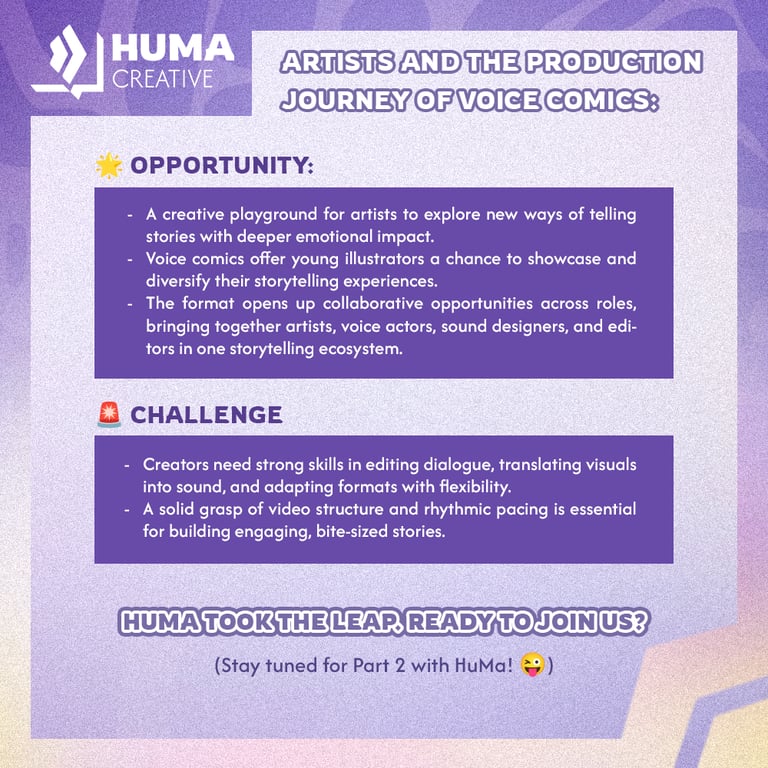
Voice comics raise an important question for creators. Is now the time to expand our creative approach into a format that brings together both visual and audio storytelling?
On the opportunity side, voice comics offer a powerful new way to tell short, emotional, and accessible stories. They are also a great starting point for IPs that are not yet ready for animation, and they encourage interdisciplinary collaboration between manga artists, voice actors, sound designers, and editors.
Of course, this also brings new creative demands. Making voice comics isn’t just about drawing panels. It requires an understanding of motion, audio rhythm, video editing, and emotional pacing. Elements such as voice tone, audio timing, and sound design are not essential in traditional comics, but they are at the heart of voice comic production.
This shift can be challenging. But it also opens doors for creators to grow their skills and bring their stories to life in exciting, innovative ways.
At HuMa Creative, we were once newcomers to this format too. But challenges don’t stop us. Through real client collaborations, we self-learned, adapted, and quickly gained hands-on experience in voice comic production.