
Voice Comic - Bringing Characters to Life: Is This Format the Next Big Thing in Vietnam? (Part 2)
XU HƯỚNG
Mai Châu
8/4/2025
In our previous article, HuMa introduced voice comics as a storytelling format that blends visuals with audio. This time, we’re diving deeper, looking at how international markets have already proven its potential and asking: Is Vietnam ready for it?
In Japan and South Korea, voice comics are no longer an experimental format. They have become an integral part of content strategies for major publishers. With millions of views and hundreds of millions of won raised through fan funding, voice comics have shown real potential to expand IP value and engage audiences through a multi-sensory experience.
Meanwhile in Vietnam, where the local comic scene is still seeking its identity and striving for sustainable growth, could voice comics be the next big push to take Vietnamese comics beyond static panels and into the world of multi-platform digital content?
A Proven Format in Japan and South Korea
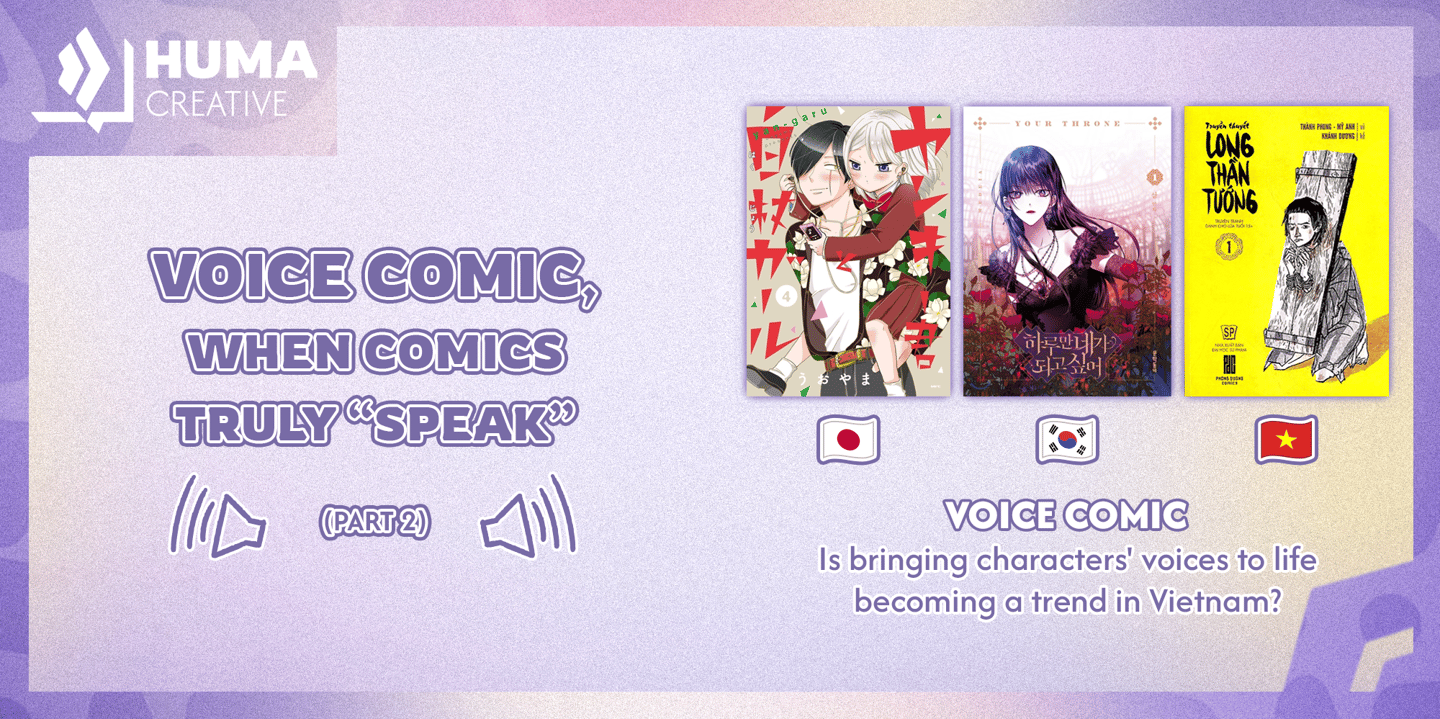
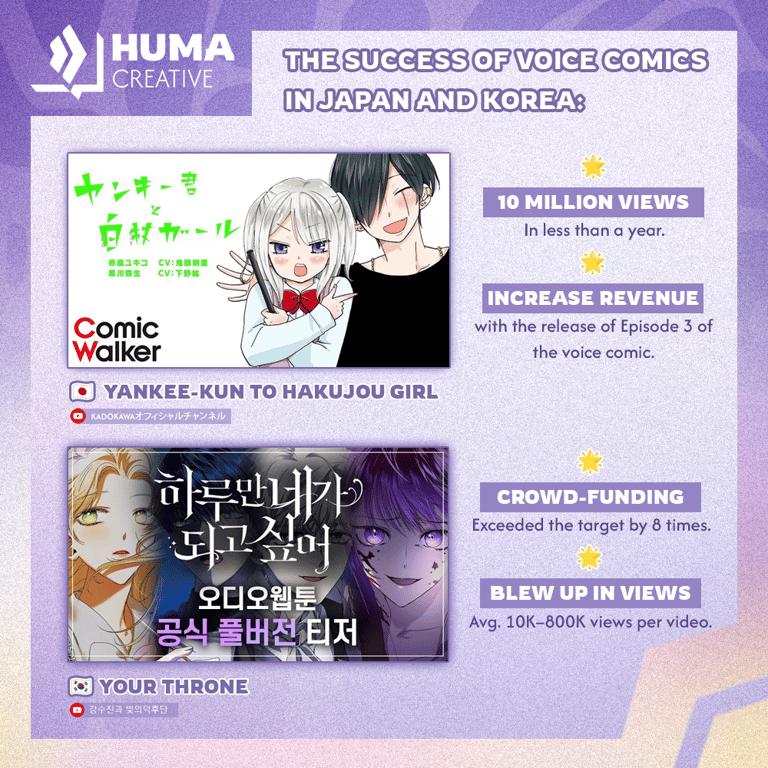
A notable case in Japan is "Yankee-kun to Hakujō Girl," a voice comic released by KADOKAWA on YouTube featuring well-known voice actress Kito Akari. In less than a year, the video reached over 10 million views, becoming a powerful marketing tool to promote the printed manga. In Japan, voice comics are not only entertainment products but also an effective marketing strategy that significantly boosts IP visibility and sales.
Meanwhile in South Korea, Naver launched the voice comic wave with its “Your Throne” webtoon project. Initially targeting 95 million won in funding, it ended up raising over 830 million won from fans in under two months. The project’s success not only validated demand for sound-integrated storytelling but also positioned voice comics as a stepping stone for future animation, drama, or game adaptations. In an era that favors short, emotionally resonant, and easily shareable content, voice comics are emerging as a smart way to elevate webtoon IPs across Asia.
Can Voice Comics be a Breakthrough Format in Vietnam?
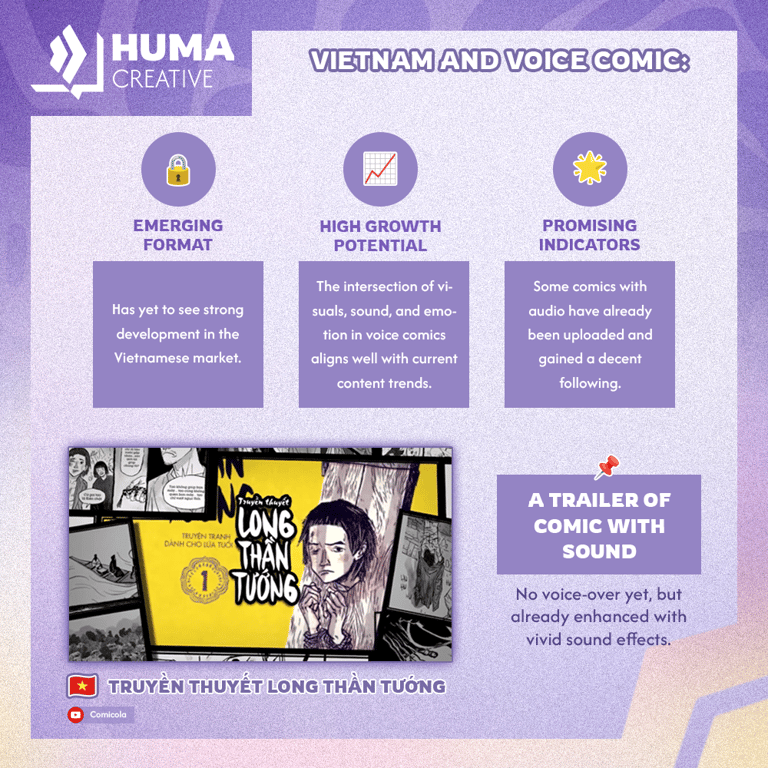
In Vietnam, voice comics are still a relatively new format and have yet to see strong development. However, the initial signals from the market suggest that this is a promising area worth exploring. The rise of TikTok, YouTube Shorts, and Facebook Reels has shown that users, especially Gen Z, are increasingly prioritizing short content with eye-catching visuals and engaging audio. This presents a clear opportunity for voice comics, as the format sits at the intersection of all three elements: Visuals, sound, and emotion.
Although no local voice comic project has reached industry-level scale like in Japan or South Korea, “Truyền Thuyết Long Thần Tướng” (The Legend of the Dragon General) once released a promotional trailer in the form of a motion comic with post-production audio. The similarity between the trailer series and voice comics lies in the simple transitions between comic panels combined with vivid sound effects. This video series received positive feedback from the community. Viewers appreciated how the panels were “brought to life” with audio effects, making the comic reading experience more immersive and accessible. Although the sound design was still relatively simple, in the context of Vietnamese comics striving to reach wider audiences, The Legend of the Dragon General has shown that combining comic art with audio can evolve into a more engaging and far-reaching storytelling format on digital platforms.
While voice comics are considered a promising storytelling format in the digital age, the reality in Vietnam shows that this format still faces many barriers that slow down its development and hinder its consistency.
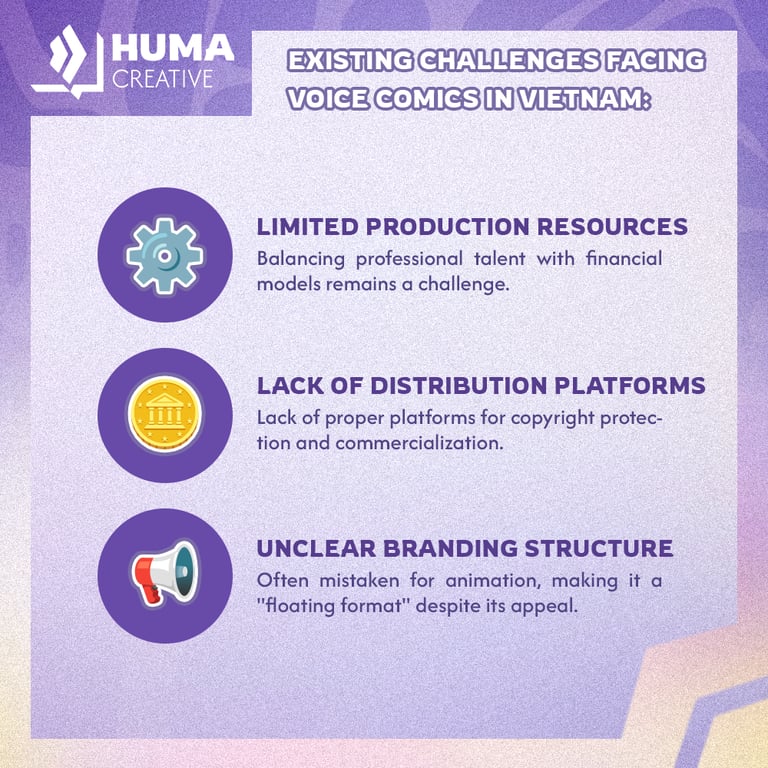
One of the biggest limitations lies in production resources. Creating a high-quality voice comic requires seamless coordination between artists, screenwriters, voice actors, sound designers, and video editors. However, few comic studios in Vietnam currently have in-house teams with expertise across all these areas. Outsourcing each component also leads to significant costs, while the market still lacks a clear financial model to ensure return on investment.
Additionally, the lack of a suitable distribution infrastructure is another bottleneck. There are no local platforms dedicated to voice comics, which forces most products to rely on foreign platforms like YouTube, TikTok, or Facebook. These platforms are not always optimized for copyright protection or long-term business models. This makes commercialization difficult, as most voice comics are still being released as free clips.
Another challenge stems from market perception. For many Vietnamese readers, comics are still meant to be read, while formats with audio are easily mistaken for animation or film. This creates a gap in consumption habits, making voice comics, despite their appeal, feel like a “floating format”: Not short enough to go viral as a quick clip, but also not fully developed to stand as animation. Without a clear identity framework, voice comic content can easily get lost in the fast-moving stream of short-form media.
However, recognizing these limitations is not to cast doubt on the potential of voice comics. Rather, it highlights the need to approach this format as a serious creative project with a clear plan for production, distribution, and business modeling. By understanding the challenges, the creative community can find the right solutions and effectively harness the full potential that voice comics have to offer.
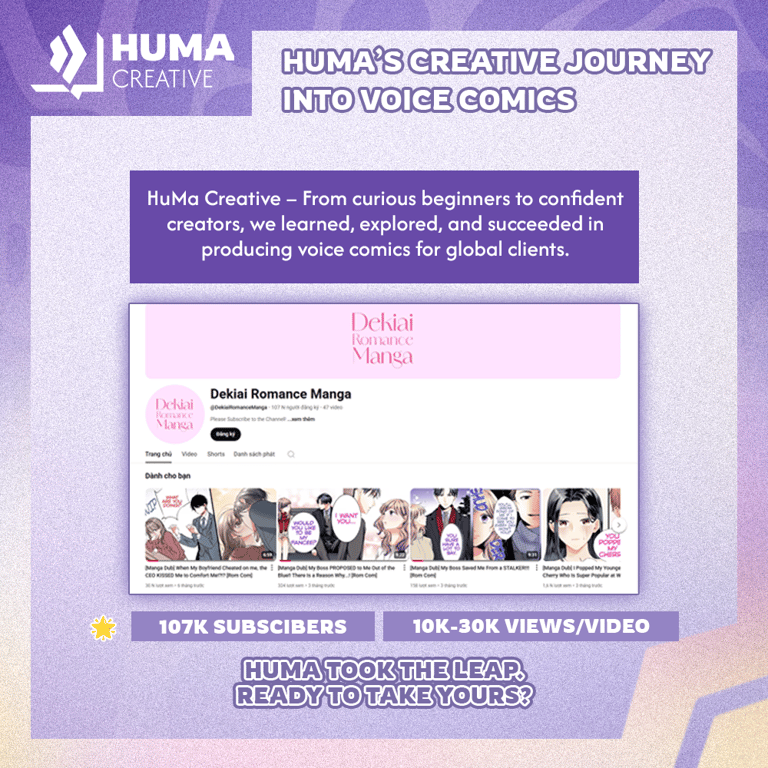
HuMa Creative has had the opportunity to produce various voice comic projects for international clients, notably the manga adaptations on the YouTube channel "Dekiai Romance Manga."