

From Static Panels to the Big Screen: Unlocking the Potential of Vietnamese Comics
XU HƯỚNG
Mai Châu
8/31/2025
You're probably already familiar with blockbuster films or hit series adapted from comics or webtoons. Adaptations have been around for a long time, and their popularity has never waned. These projects have formed historic collaborations between the worlds of comics and cinema. Films based on comics not only breathe new life into intellectual properties (IPs) on screen, but also serve as a powerful bridge connecting loyal readers with the general public, generating massive revenues and widespread media coverage.
Beyond the expansive cinematic universes of Marvel and DC or Japan’s vibrant live-action genre, in recent years, Korean webtoon-based dramas and series have captivated global audiences.
Join HuMa as we explore the comic-to-film adaptation trend to better understand its purpose, pros and cons, the state of development in Vietnam, and perhaps you could be the one to create the next major milestone for Vietnamese IPs.
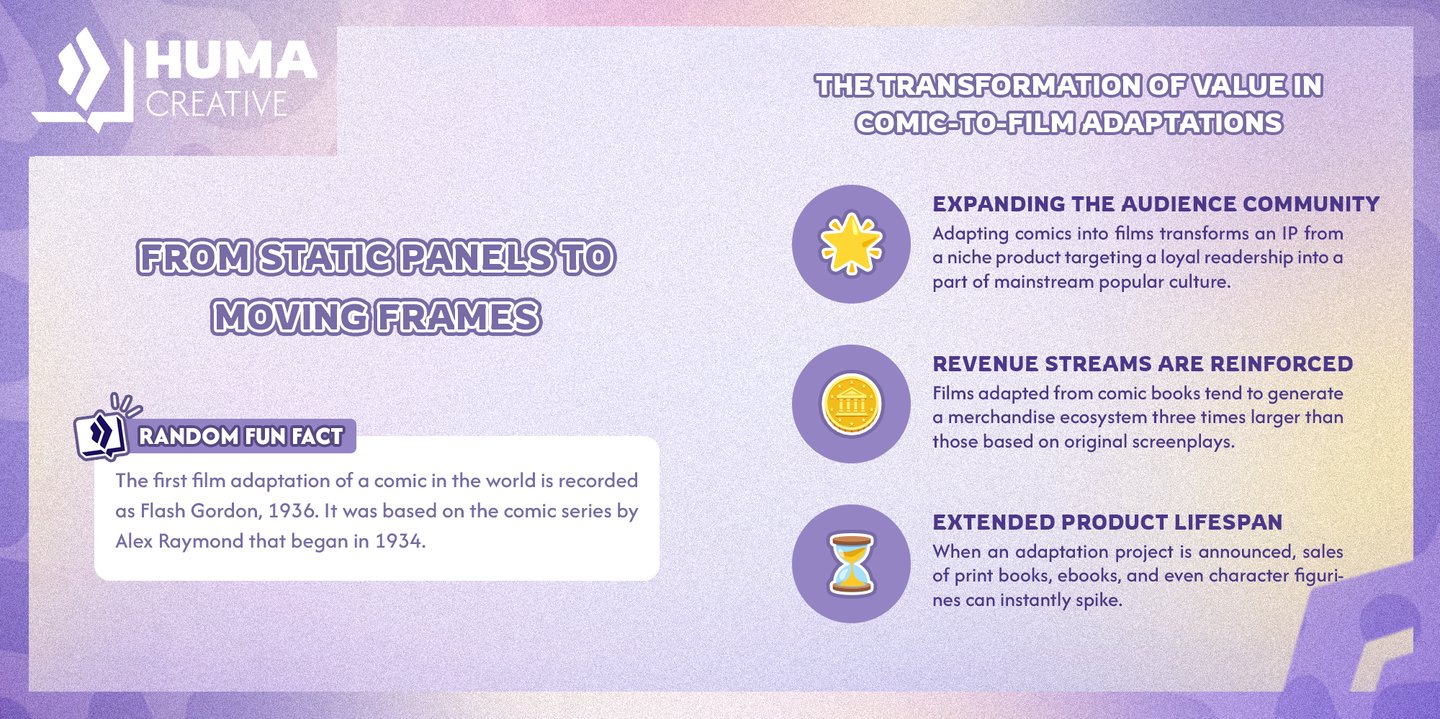
Comic-based film adaptations are typically scripted based on the original story. Key characters and plot elements are retained, though the script may be adjusted during collaboration between filmmakers and original creators to suit audience preferences, budgets, studios, and cultural markets.
This genre represents a major leap for IPs, breaking free from static panels to enter the dynamic world of film. It's not just about putting a story on screen but unlocking its full potential. Adaptations build a bridge between loyal fans and general audiences, increase commercial value, extend a work’s lifespan, and elevate it into a cultural icon that lives on in collective memory.
When a comic is brought to screen, it reaches millions of new viewers who may never have opened a comic book, and its influence often expands into other fields. Adaptation transforms niche IPs into a part of mainstream culture, embedded in everyday life, media, and even the subconscious of non-fans.
Multiplatform IP exploitation allows publishers, production houses, and studios to generate substantial additional revenue streams, from broadcast rights and advertising to merchandise, games, and spin-offs. According to the Motion Picture Association, comic-based films are three times more likely to develop an extended product ecosystem than those based on original scripts.
Adaptation also revitalizes works whose popularity may have faded. Many manga and webtoons see spikes in print and digital sales, or character figurine demand, when a film adaptation is announced.
Worldwide, comic-to-film adaptation has become a key strategy to maximize IP value.
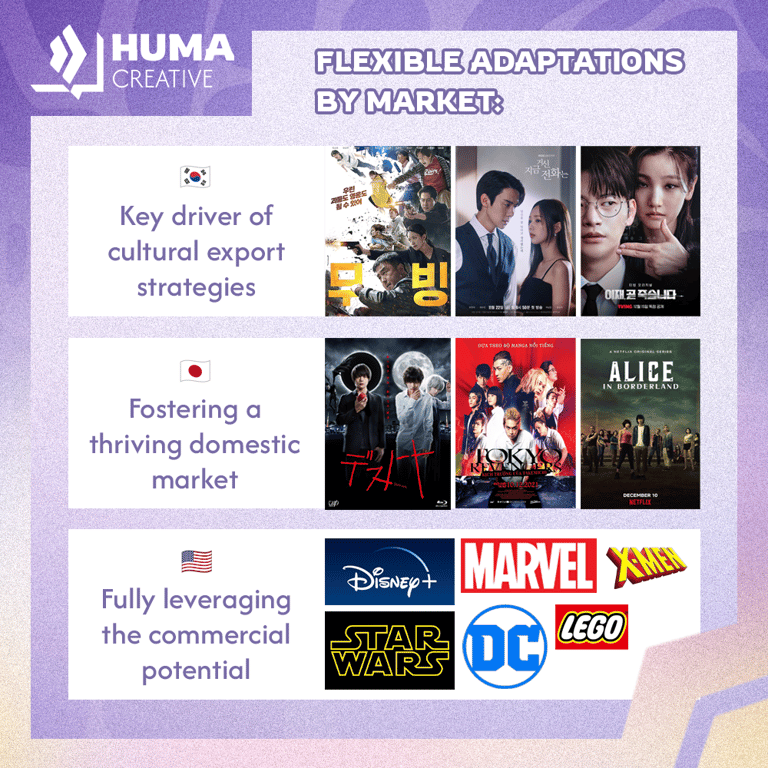
In South Korea, it is seen as a spearhead of the Hallyu cultural export wave, with webtoons and domestic IPs prominently featured on Netflix and Disney+, bolstering national soft power. In 2023 alone, nearly 20 Korean webtoons were announced for adaptation. Titles like Sweet Home, Itaewon Class, and more recently Moving have not only shattered viewership records but frequently trended globally on Netflix. According to the Korea Creative Content Agency (KOCCA), adapted webtoon IPs contributed more than 30 percent of South Korea’s total content export value.
In Japan, manga has long been regarded as a “gold mine of scripts” for the live-action industry. Works like Tokyo Revengers, Alice in Borderland, and various Death Note adaptations have not only maintained box office performance but also revived older titles, fueling reprints and merchandise sales. Unlike Korea, Japan emphasizes nurturing the domestic market, using live-action to retain audiences within its deeply rooted manga and anime ecosystem.
Meanwhile, in Western markets, filmmakers fully capitalize on the commercial aspect, building massive cinematic universes that generate revenue through each film, merchandise line, and spin-off game. Comics have evolved into foundational blueprints for billion-dollar franchises. Statista reports that the Marvel Cinematic Universe alone has grossed over 28 billion USD globally in just over a decade, demonstrating the enormous power of IP expansion across formats.
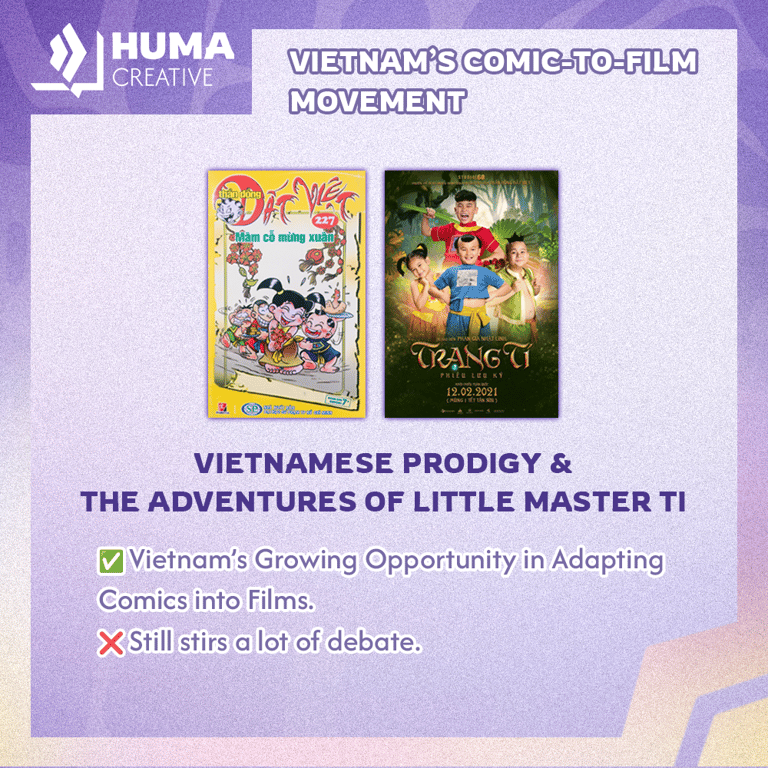
In Vietnam, comic-to-film adaptations are still in their early stages, with only a few projects underway. One notable recent effort is "Trạng Tí Phiêu Lưu Ký," adapted from the beloved childhood series "Thần Đồng Đất Việt." It marked a bold and commendable step toward bringing Vietnamese comic IPs to screen. However, the film faced controversy over copyright issues and a script that many felt lost the spirit of the original. Critics also pointed to inconsistent storytelling and performances.
Despite its moderate box office success and media attention, the case of "Trạng Tí Phiêu Lưu Ký" highlights the challenges Vietnamese adaptations still face. These include thorough preparation in ownership rights, source material quality, and production capabilities to truly win over audiences.
This reality reveals many challenges and lessons for Vietnam’s journey to bring comics to the screen. Unlike novels or text-based works, adapting comics requires a unique skill set. Audiences already have vivid images of characters, plots, and worlds, making even small changes highly polarizing. Filmmakers must balance staying true to the original spirit while creating something fresh and compelling for new viewers.
Moreover, faithfully recreating settings, emotions, fantastical scenes, or action sequences - key strengths of the comic medium - often hits limitations in Vietnam’s still-developing film technology and special effects landscape. Film production is costly, requiring large budgets and teams, with high risk and uncertain returns, while Vietnam’s local comic market still struggles to produce works impactful enough to convince investors.
Copyright is another critical lesson, especially after the "Thần Đồng Đất Việt" incident. It underscored the need for clear legal groundwork to protect both creators and producers, avoiding disputes that could derail future projects.
As Vietnamese cinema seeks bold transformations in ideas and original IPs, the comic-to-film trend holds immense potential to expand IP development. Film has long proven itself as fertile ground for commercialization and building cultural legacy. But success demands serious effort from the comics community: Creating polished, shareable works and cultivating loyal readerships to increase commercial value and attract investment.
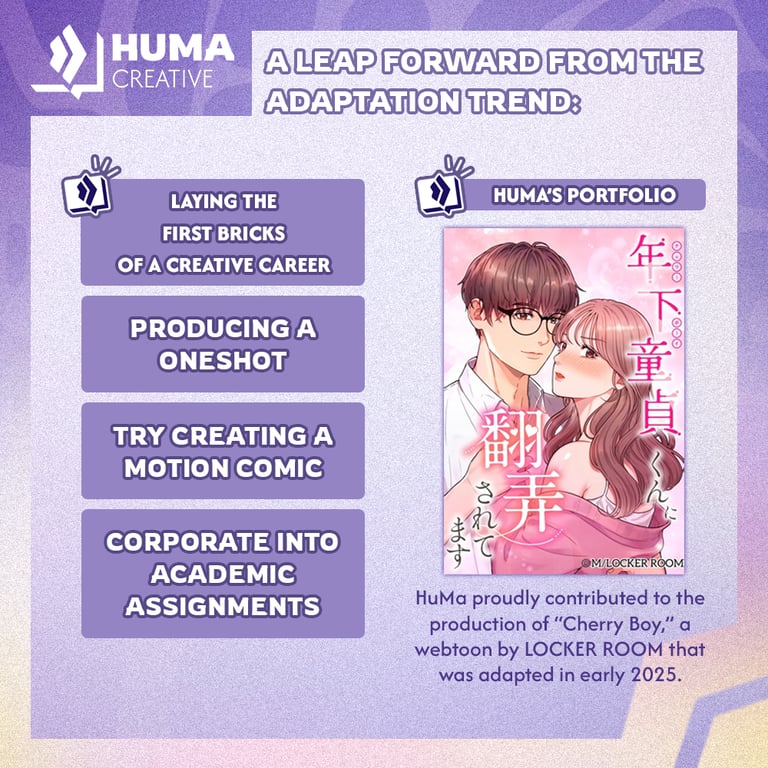
Artists can start small: Create one-shot comics, experiment with motion comic formats, or turn film adaptation concepts into school thesis projects. These are excellent ways to hone skills, build portfolios, and open long-term collaboration opportunities.
If you're looking for a team to walk with you on the creative journey and bring original works with adaptation potential to life, allow us to share this.
HuMa is proud to be a Vietnamese team that contributed to the production of the webtoon "Cherry Boy" (年下童賛くんに翻弄されてます), which was later adapted into a film. This shows that projects born from a passion for storytelling through comics can absolutely evolve and make the leap into film and multiplatform success.